
CONCRETE SLABS
Specialising in concrete house slabs, shed slabs, garage slabs and patio slabs across Townsville
What Type of Slab Does Your Project Actually Need?
Not every slab is built for the same purpose. A small garden shed, a double garage, a home extension and a large workshop all place different loads on the concrete, and each one needs the right base preparation, thickness, reinforcement and edge detail.
For most residential projects in Townsville, the first question is not just “how much concrete do I need?” It is “what will this slab be supporting?” A light storage shed may only need a basic reinforced slab, while a garage or larger shed may need stronger preparation because vehicles, shelving, tools and equipment will add more weight over time.
House slabs and extensions usually need closer planning because they may involve engineering requirements, setdowns, plumbing penetrations, termite barriers, moisture control and building approvals. These are not the areas where shortcuts save money. A slab that moves, cracks badly or drains poorly can affect everything built on top of it.
If your project is part of a broader property upgrade, our main Townsville concreting services page gives an overview of the different concrete work we handle, but this page focuses specifically on slabs and building foundations rather than general outdoor concrete.
Why Slab Preparation Matters So Much in Townsville
Townsville conditions can be hard on concrete. Heat, dry periods, heavy rain, clay movement and uneven fill can all affect how a slab performs after it is poured. The concrete itself is only one part of the job. The ground underneath it is just as important.
In suburbs with newer estates, such as Bohle Plains, Mount Low and parts of Burdell, slab work often involves prepared residential blocks, new sheds, garages and outdoor living additions. These jobs still need proper boxing, levels and compaction, especially where the yard has been filled or shaped during the original build.
In older areas like Aitkenvale, Currajong and Hermit Park, slabs are often added around existing homes. Access can be tighter, levels can be less predictable, and stormwater paths may already be established through the yard. A new slab needs to fit the property rather than fight against it.
The most common slab problems usually start before the pour. Soft spots, poor compaction, inadequate drainage, thin edges or rushed preparation can lead to cracking, settlement and water pooling. Good slab work is not just about making the surface look flat on the day. It is about giving the structure above it a stable base.
Shed Slabs Need More Than a Flat Patch of Concrete
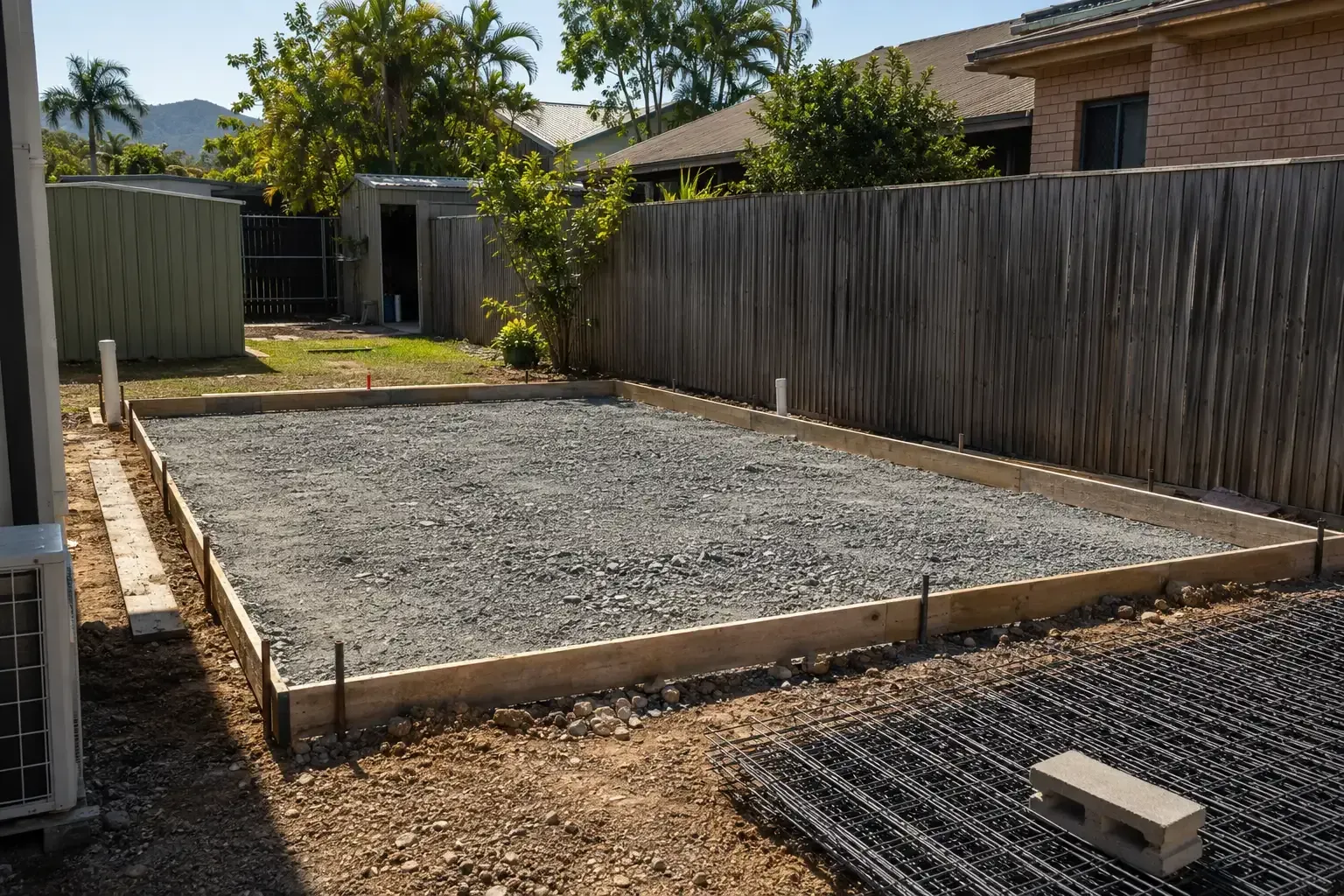
Shed slabs are one of the most common slab projects around Townsville, but they are also one of the easiest to underestimate. A shed slab has to suit the shed size, the door openings, the site levels and the way water will move around the structure once it is built.
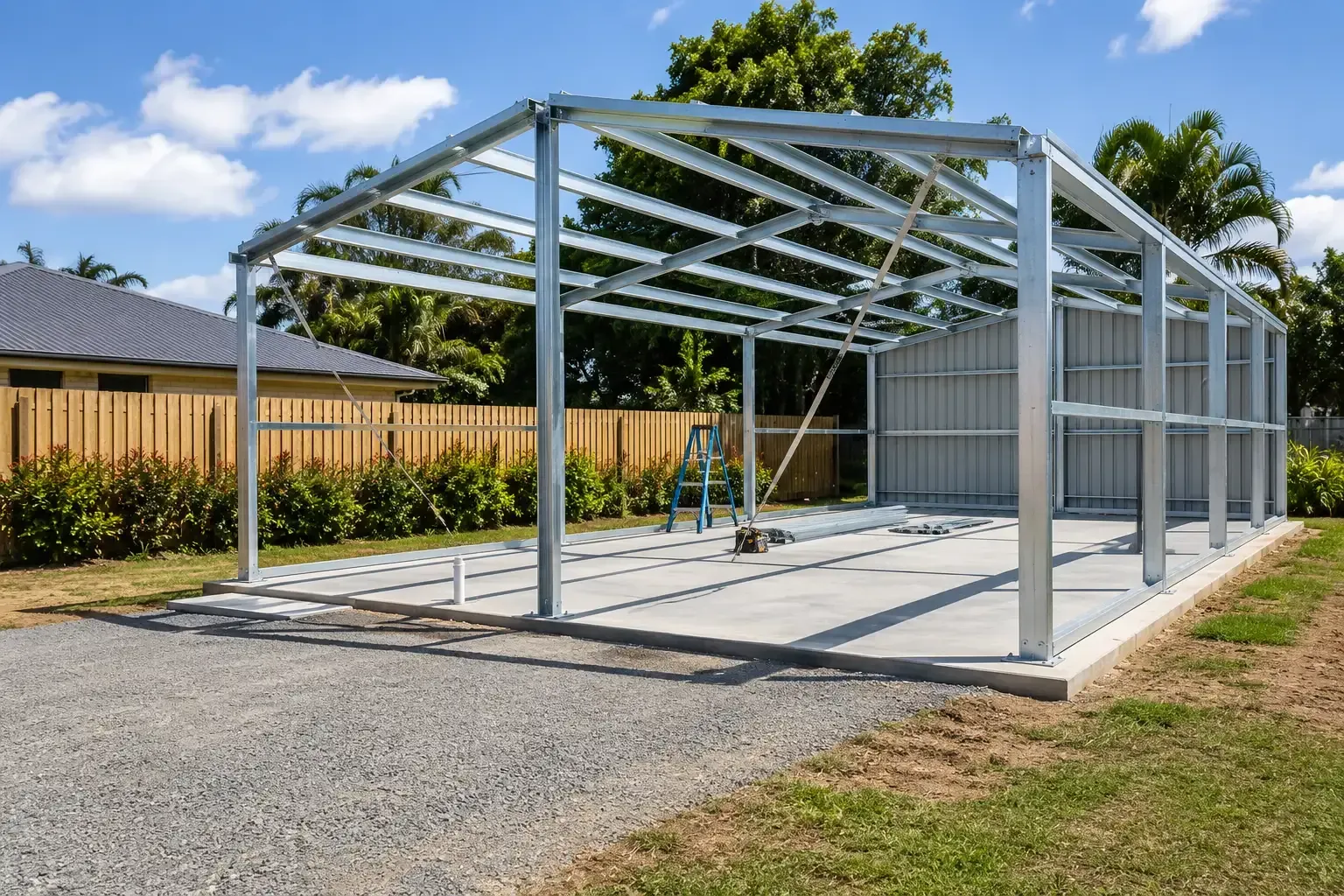
A small garden shed may be simple, but larger sheds and workshops need more thought. The slab may need thickened edges, stronger reinforcement, vehicle-friendly entry points, anchor points and accurate dimensions to match the shed supplier’s requirements. If the slab is too small, out of square or poured to the wrong height, the shed installation becomes harder and sometimes impossible without extra work.
Water is another major issue. A shed slab should not sit in the natural low point of the yard without a plan for runoff. During heavy rain, water can push against the slab edge, run through doors or sit against the shed walls. The finished height, surrounding ground level and fall away from the slab all matter.
For acreage blocks, larger sheds or rural-residential properties around Kelso, Bluewater and Alice River, access for concrete trucks and site preparation equipment should also be considered early. A slab may look straightforward on paper, but the job can change quickly if the site is steep, soft, narrow or difficult to reach.
House, Garage and Extension Slabs Need Careful Planning
Slabs connected to a home need more detailed planning than a simple outdoor pad. House extensions, garage slabs, granny flat bases and enclosed additions often need to work with existing floor heights, drainage, plumbing, walls, doors and building requirements.
One of the most important details is finished level. If the slab is too high, water may move toward the home or create awkward step heights. If it is too low, water can sit around the edge or enter the new space during storms. Where the new slab meets an existing house, the transition needs to be considered before the concrete is poured.
Garage slabs also need to suit how the space will be used. A garage used only for storage is different from one holding vehicles, workbenches and heavy shelving. The slab may need appropriate thickness, reinforcement and edge support so it can handle long-term use rather than just looking right when new.
This is where it helps to separate slab work from general outdoor concrete. A concrete driveway is designed for vehicle movement and access. A slab is designed to support something built on top of it. The finish may look similar, but the planning priorities are different.
What Should Be Checked Before the Slab Is Poured?
Before a slab is poured, the important decisions should already be made. Concrete day is not the time to discover that the slab is the wrong size, the levels do not work or a pipe needs to pass through the area.
Slab Size & Setout
The slab needs to match the project, not just the rough space available in the yard. Shed dimensions, wall positions, roller doors, overhangs and access points should be confirmed before boxing is finalised.
Finished Slab Height
The finished slab height affects drainage, door thresholds and how the slab connects with the rest of the property. In Townsville, allowing for heavy rain is important even on blocks that look flat.
Base Preparation
Soft soil, loose fill and uneven ground need to be corrected before reinforcement and concrete go in. A compacted base helps reduce movement and gives the slab more consistent supporting base.
Reinforcement
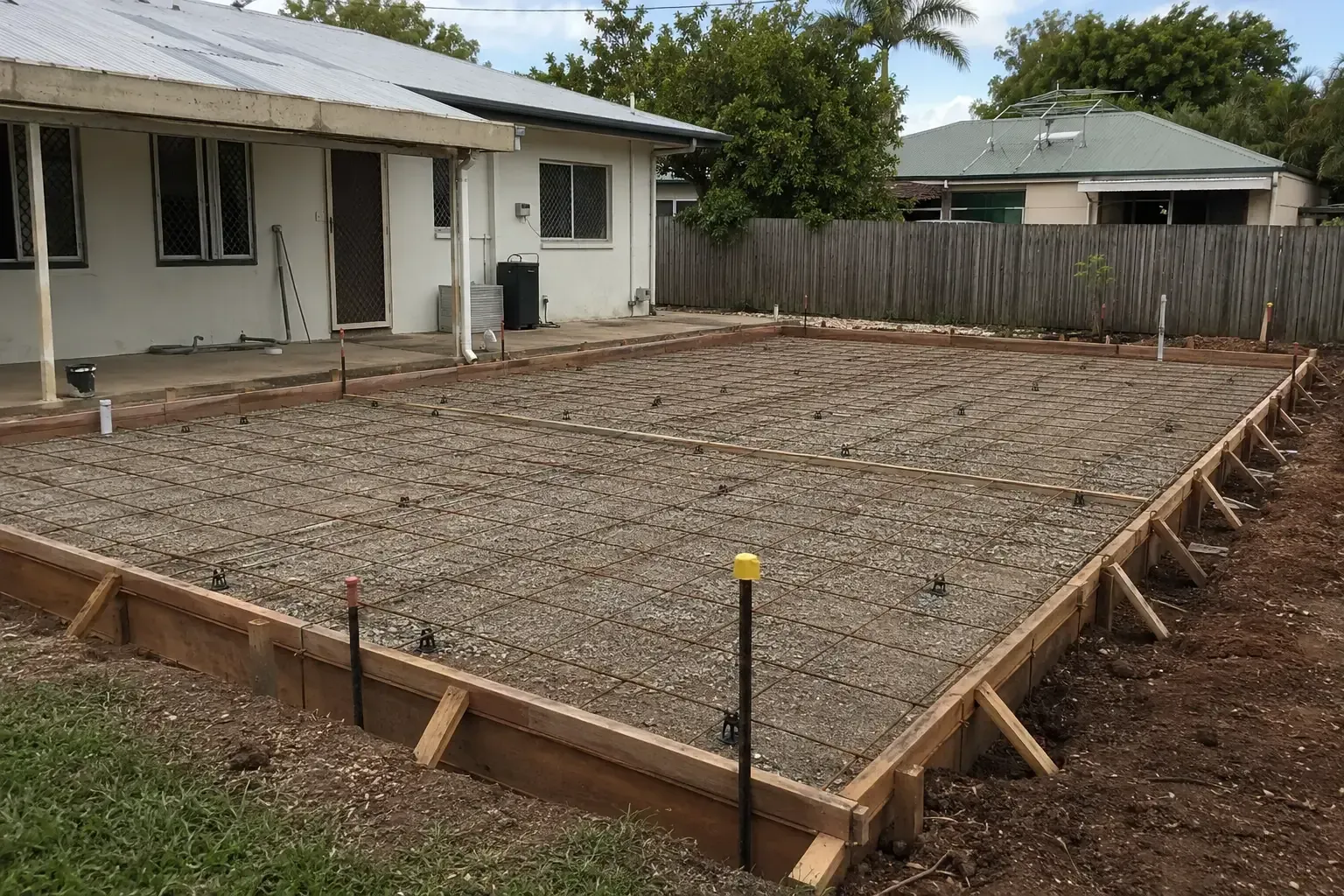
Slab reinforcement helps control cracking and improves the overall strength. The right reinforcing approach depends on the slab size, the intended use, loading and any engineering requirements.
Access for the Pour
Concrete delivery needs to be practical. We have a range of solutions for when limited side access, fences, garden beds, pools, slopes and soft ground affect how the concrete reaches the slab area.
Slab Drainage
Water should be directed away from the slab where possible. This may involve adjusting surrounding ground levels, allowing fall, or planning future drainage before the pour and the slab locks the area in.
Reinforcement, Thickness & Concrete Strength Should Match the Use
Most homeowners want a simple answer on slab thickness, but the right answer depends on the job. A small slab for a light shed is not the same as a garage slab, workshop slab or house extension. The intended use should guide the specification.
Reinforcement is used to help hold the slab together and control cracking. Concrete will still expand, contract and respond to ground movement, but reinforcement gives the slab better structural integrity. For larger slabs, vehicle loads or building work, reinforcement should not be treated as an optional extra.
Concrete strength also matters. A basic outdoor slab may not need the same mix as a slab supporting heavier use. The mix, thickness, reinforcement and base preparation all work together. One strong part does not compensate for a weak part underneath it.
For decorative outdoor areas, appearance may be the main concern, and our decorative concrete page covers finishes such as exposed aggregate, coloured concrete and acid staining. For slabs, the priority is different. The slab has to be square, stable, level where required and suitable for it's intended use or the structure that will sit on it.
When Does a Slab Need Engineering or Approval?
Some slabs are simple residential concrete jobs. Others form part of a building project and may need engineering, plans or council approval. The difference usually comes down to what is being built, the size of the structure and whether it is attached to or associated with a dwelling.
A small non-habitable shed slab may be straightforward, but a larger shed, garage, carport, extension or granny flat base can involve more formal requirements. Shed suppliers may provide slab drawings or specifications, and these should be followed carefully. Where engineering is required, the slab needs to be built to that design rather than guessed on site.
Homeowners should confirm approval requirements before booking the pour. It is much easier to build the slab correctly from the start than to modify concrete later because a detail was missed. Penetrations, rebates, edge beams, footing details and hold-down requirements should all be sorted before concrete is ordered.
If you are unsure whether your suburb or project type affects access, timing or local conditions, the
Townsville service areas page gives more context on the areas we work across and the kinds of residential blocks common around the region.
The Slab Pour Is Only One Part of the Job
A good slab job usually follows a clear sequence. The visible pour may only take part of a day, but the preparation before it determines the final result.
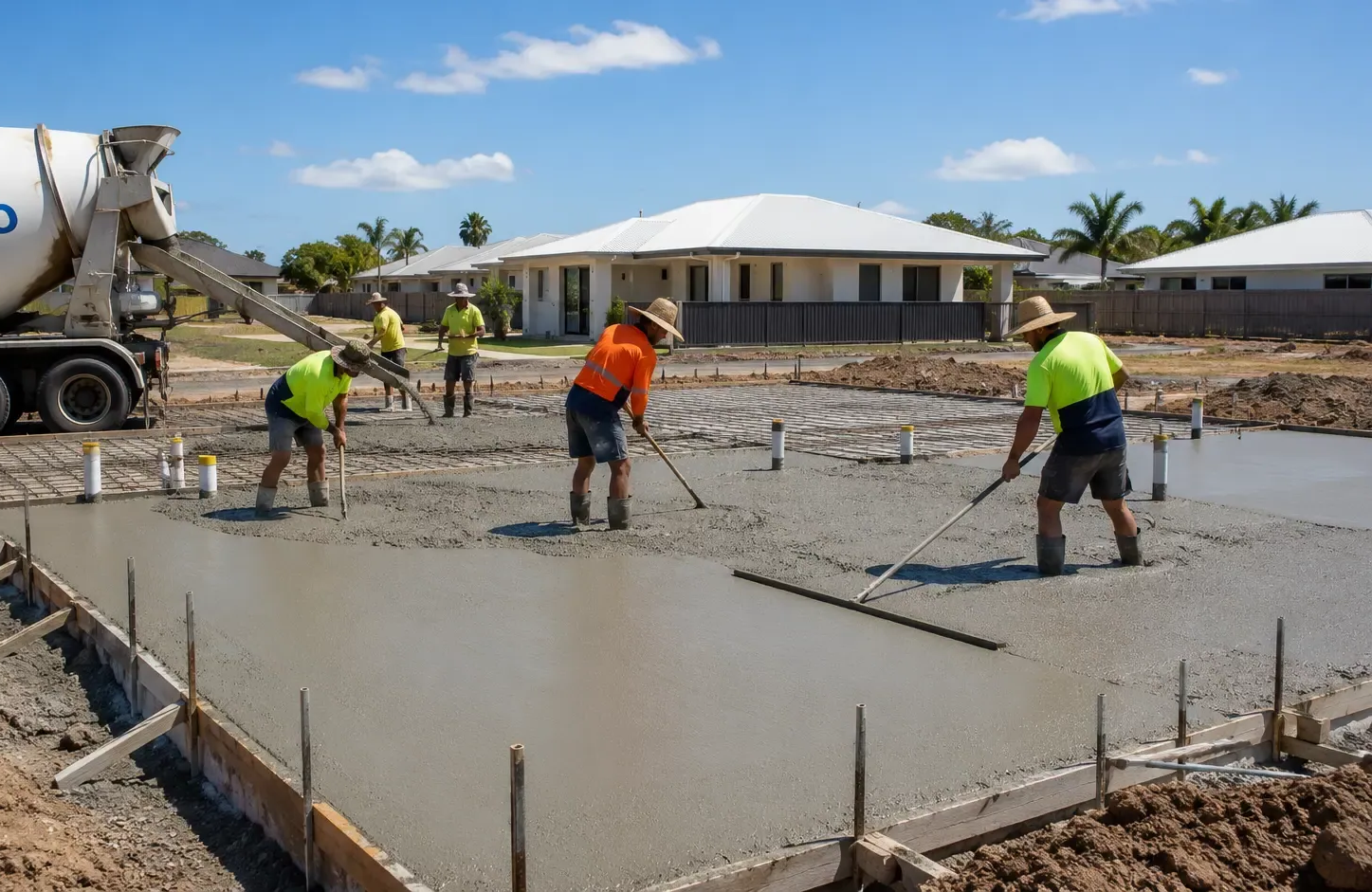
The site is first checked for access, levels and the intended slab position. Any unsuitable material may need to be removed, and the area is shaped so the slab can sit on a stable base. Boxing is then installed to set the slab size and finished height. Once the base is prepared and compacted, reinforcement can be placed in the correct position.
During the pour, the concrete needs to be placed, levelled, worked and finished before it starts to go off in the Townsville heat. Hot weather can shorten working time, so timing and preparation matter. The crew needs to be ready before the truck arrives, not still adjusting boxing or debating levels.
After finishing, curing and early care affect the slab as it hardens. Concrete gains strength over time, and loading it too early can cause avoidable damage. For shed and garage slabs, it is worth confirming when the slab can safely take construction, vehicle or storage loads.
For simpler pedestrian concrete around the home, such as side access or garden links, our concrete paths page covers movement around the property rather than structural slab work.
Frequently Asked Concrete Slab Questions
Every slab project is different. Taking the time to consider the intended use, site conditions and future requirements can help ensure the finished slab meets the needs of the project.
How thick should a concrete slab be?
A concrete slab should be thick enough for what it needs to support. Small light-use slabs may be simpler, while shed, garage and house-related slabs often need stronger preparation, reinforcement and sometimes engineering. The thickness should not be guessed without considering the load, ground conditions and intended use.
Do shed slabs need reinforcement?
Yes, most shed slabs should be reinforced. Reinforcement helps control cracking and gives the slab better strength across the prepared base. The size of the shed, the expected load and the slab design will influence what reinforcement is suitable.
Can a slab be poured on uneven ground?
Only after the site has been properly prepared. Uneven ground may need excavation, filling, compaction or level correction before boxing and reinforcement are installed. Pouring directly over uneven or soft ground increases the risk of cracking, movement and poor drainage.
How soon can I build on a new concrete slab?
Concrete hardens enough for light handling earlier than it reaches full strength. The right waiting time depends on the slab, weather, concrete mix and what is being built on it. For sheds, garages or heavier loads, it is best to confirm timing before construction begins.
Does a slab need drainage around it?
Yes, water should be planned around the slab. A slab that traps water or sits too low can create damp edges, pooling and water entry into sheds or garages. Finished height, surrounding ground levels and fall away from the slab should be considered before the pour.
Can slab work be completed alongside other concrete projects?
Yes. Slab projects are often completed in conjunction with driveways, pathways, patios and other residential concrete improvements.
Common Slab Mistakes That Cause Problems Later
Slab problems are often expensive because they are difficult to fix once a shed, garage or extension is sitting on top. The best time to avoid them is before the concrete goes in.
One common mistake is pouring too thin for the intended use. The slab may look fine for a while, but heavier loads can expose weak preparation. Another is ignoring water movement. A slab that blocks natural runoff can create pooling, damp edges or water entry into the structure.
Poor setout can also cause issues. If the slab is out of square, too small or positioned incorrectly, the building above it may not fit properly. This is especially important for kit sheds and garages where the slab dimensions need to align with the supplied structure.
Access is another detail homeowners sometimes underestimate. If a slab is located behind a house, near a pool, beside a narrow fence line or at the rear of a steep block, concrete placement needs to be planned. Sometimes the hardest part of the job is not the slab itself, but getting the concrete to where it needs to go.
Where concrete is mainly being used to improve everyday movement around the home, concrete pathways may be what you are after. Where it is being used to support a structure, the slab needs to be treated as a foundation.
A Few Tips Before You Request a Concrete Slab Quote
The more information you can provide before requesting a quote, the easier it is to price the slab accurately. Approximate slab size is helpful, but it is only part of the picture.
For shed slabs, include the shed dimensions, supplier drawings if available, planned door locations and whether vehicles or heavy equipment will be stored inside. For garages and extensions, include any plans, engineering, existing floor levels and whether plumbing or services need to pass through the slab area.
Photos are also useful. A few clear images of the access path, work area, existing ground levels and nearby structures can quickly show whether the job is straightforward or needs extra planning. This is especially helpful on tighter blocks around established Townsville suburbs where access and drainage may be less obvious from measurements alone.
If you are ready to discuss a slab for a shed, garage, extension or residential project, you can fill in the form below including any drawings, measurements or site photos you already have.
Contact Us
We will get back to you as soon as possible.
Please try again later.