
CONCRETE PATHS
Plain & decorative concrete pathways for gardens, side access and outdoor living areas across Townsville
Where Concrete Paths Make the Biggest Difference
Concrete paths are often one of the simplest ways to make a property easier to live with. They stop worn grass tracks, reduce mud through the house, improve access to outdoor areas and make awkward side spaces more usable.
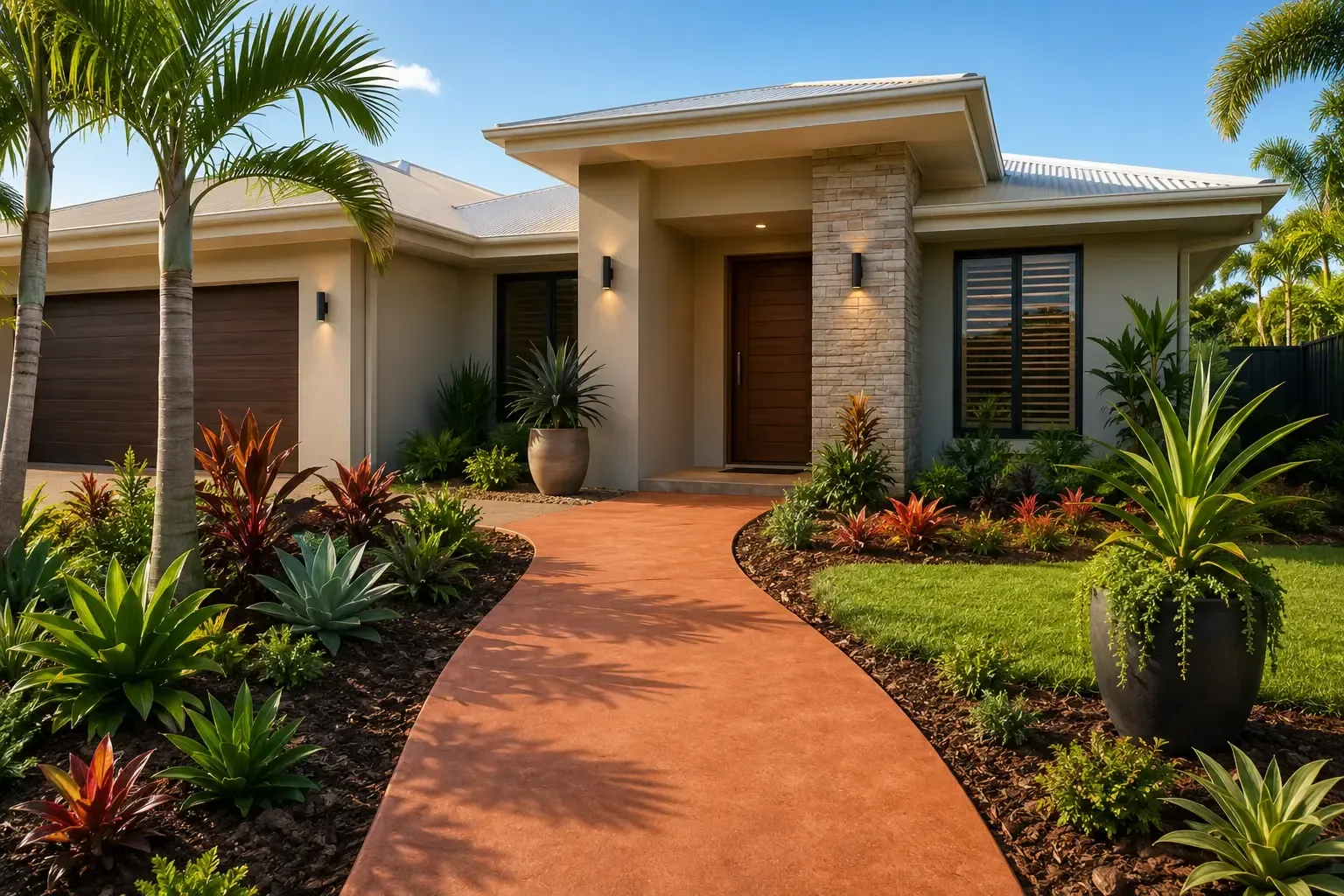
Around Townsville homes, paths are commonly added beside houses, between patios and clotheslines, around pools, along garden edges and through areas that become slippery or messy after rain. In suburbs like Aitkenvale, Currajong and Kirwan, older homes often have narrow side access where a simple concrete path can make everyday movement much easier.
A good path should feel like it belongs to the property. It should follow the way people already move around the home rather than forcing an awkward route that nobody uses.
If the path is part of a broader outdoor upgrade, the Townsville concreting home page gives an overview of the other residential concrete work available.
What Makes a Good Side Access Path?
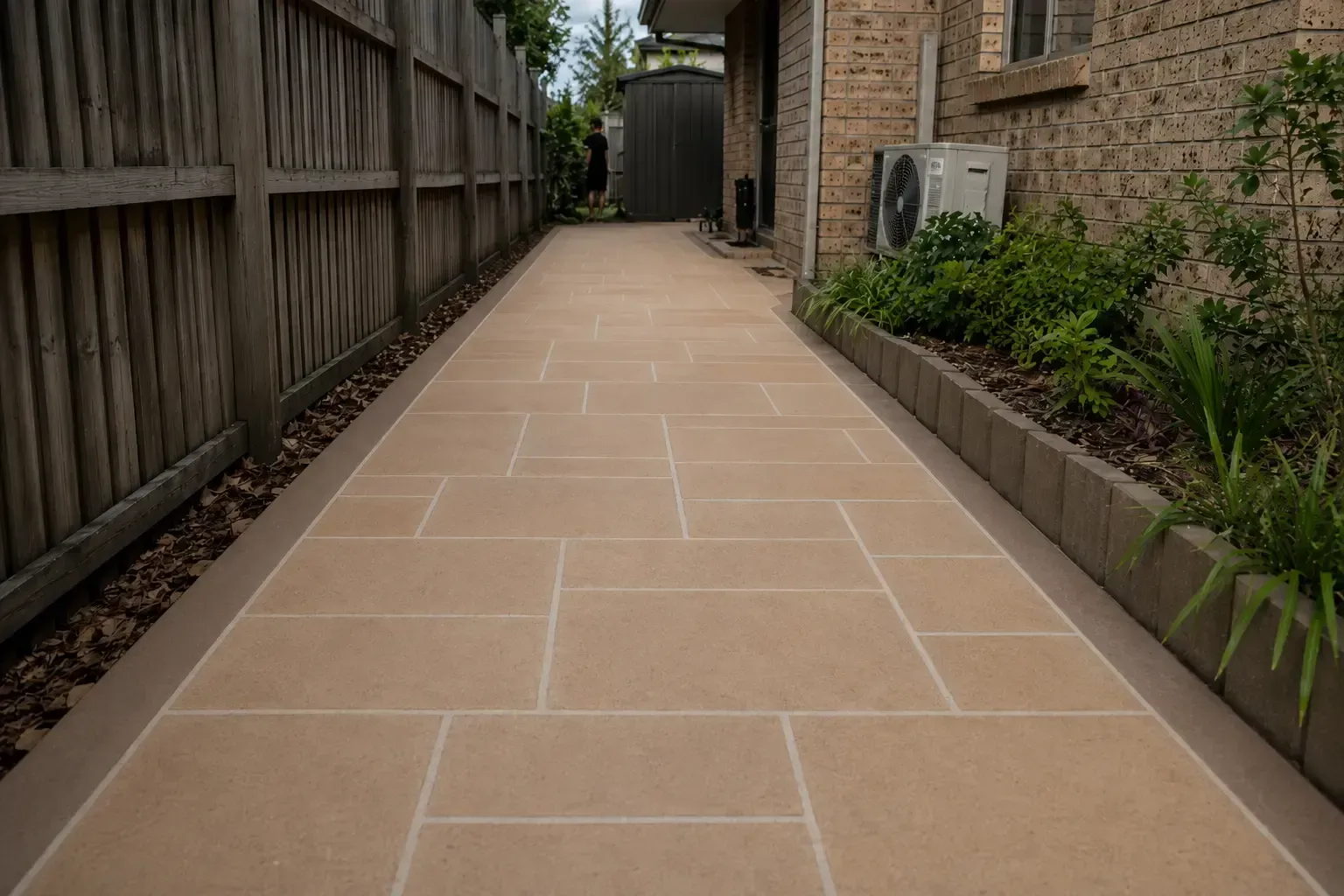
Side access paths need to be practical before anything else. They usually sit in tight spaces, often between the house and fence, where drainage, falls and usable width all matter.
A path that is too narrow can feel uncomfortable to use, especially when carrying bins, tools, pool gear or gardening equipment. A path that is poured without proper fall can hold water against the house or fence line. In Townsville, that matters because heavy rain can quickly expose poor levels.
For most homes, the best side path is one that:
Gives Enough Walking Width
The path should be wide enough for normal movement without feeling squeezed. Narrow paths can work, but they need to be planned carefully around gates, air-conditioning units, downpipes and garden beds.
Falls Away From the House
Concrete should not trap water against the building. Even a small amount of fall can help direct runoff away from walls and toward a suitable drainage point.
Handles Regular Use
Side paths often carry more foot traffic than expected. Bins, hoses, pets, kids and regular maintenance all place wear on the surface, so the finish should suit daily use rather than just appearance.
If water movement is already a problem along the side of the home, it may be worth considering this before other concrete work such as driveway drainage or driveway planning, because the same fall and runoff issues can affect different parts of the property.
Garden Paths Should Be Easy to Walk On, Not Just Decorative
Garden paths can look good, but they still need to work properly. A path that is too uneven, too narrow or poorly placed often becomes something people walk beside rather than on.
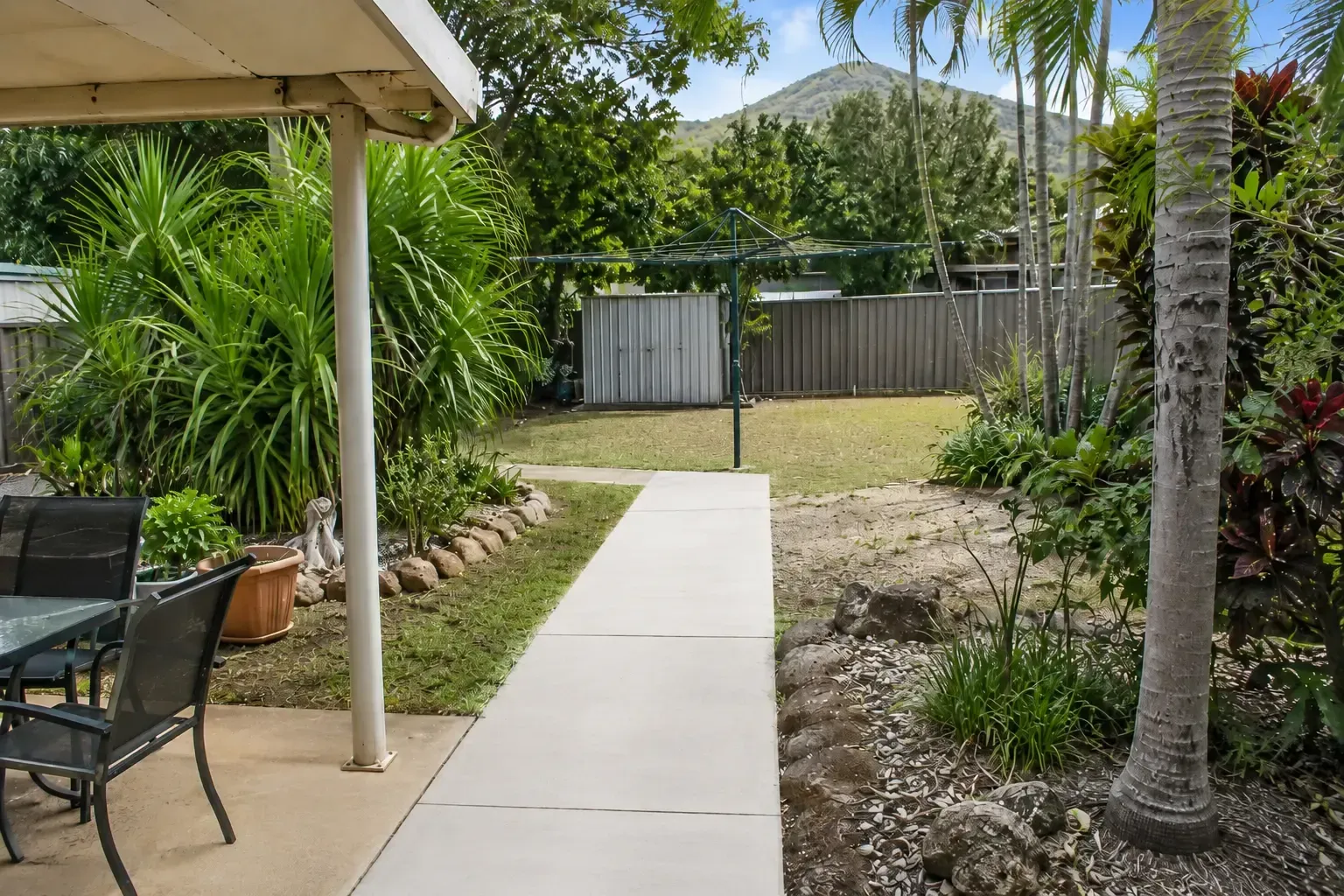
Concrete garden paths are useful where gravel moves around, pavers shift, or lawn becomes muddy after watering and rain. They can help connect patios, sheds, clotheslines, pools, side gates and outdoor entertaining areas without creating a high-maintenance surface.
In Townsville’s heat, the finish also matters. A very dark decorative finish may look sharp, but it can hold more heat underfoot. A plain, lightly textured or exposed aggregate surface is often more practical for garden and outdoor access areas.
Pool Paths Need Grip, Drainage and Comfortable Access
Paths around pool areas need more care than a standard garden walkway. Wet feet, kids moving quickly, shade, sunscreen and smooth surfaces can all increase slip risk.
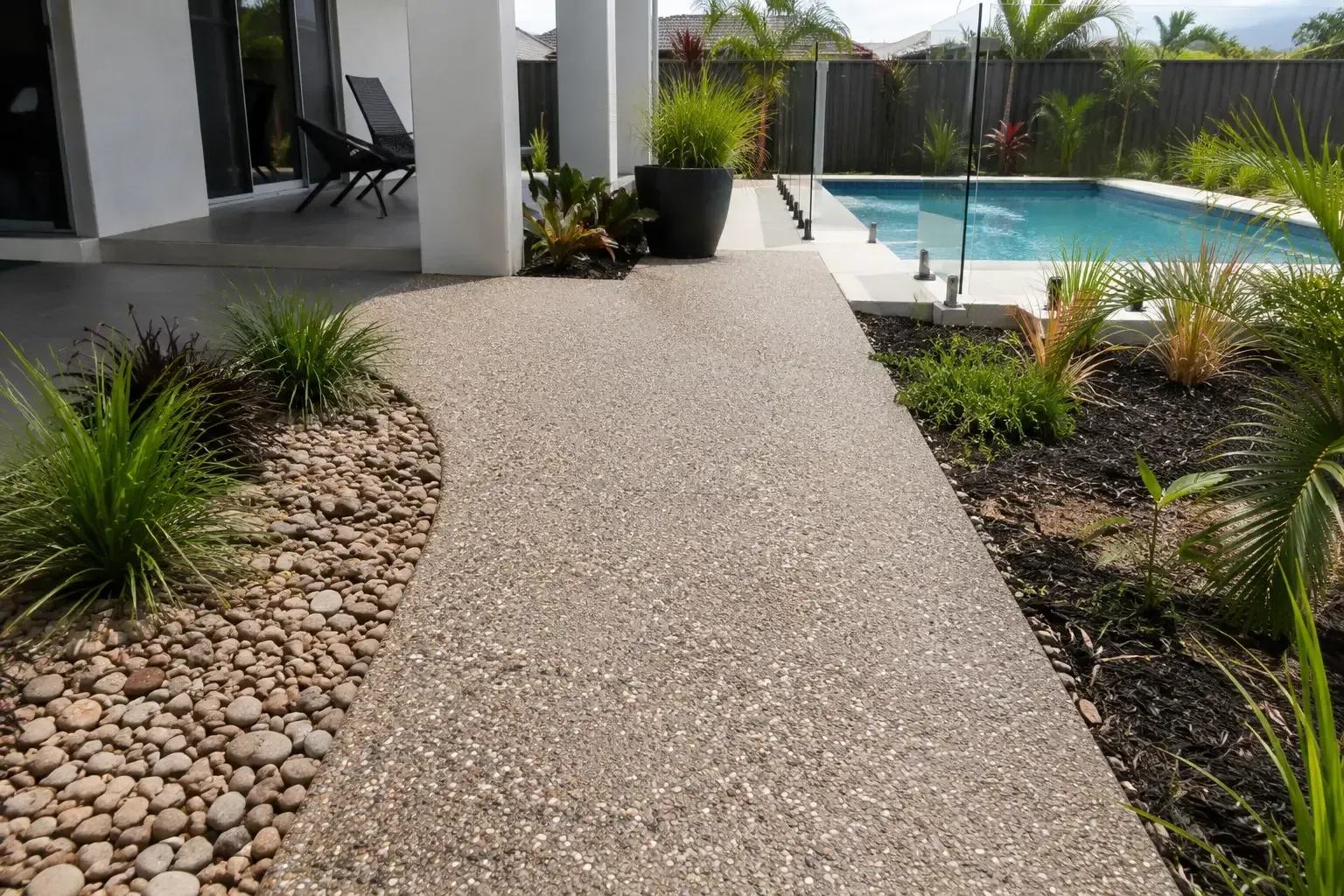
The right finish is usually one that provides grip without being harsh under bare feet. A lightly textured broom finish, suitable exposed aggregate or another practical non-slip surface can work depending on the surrounding pool area and the look of the home.
Drainage is just as important. Pool paths should not leave water sitting where people step in and out of the pool area. They should also be planned so runoff does not create damp spots against fences, garden edges or paved areas.
For homeowners wanting the path to match surrounding outdoor areas, the decorative concrete options page covers exposed aggregate, coloured concrete and other finishes in more detail.
Choosing the Right Finish for a Concrete Path
The best finish depends on where the path sits and how it will be used. A front entry path has different priorities to a side access path, pool path or garden walkway. Below are a couple of points to consider for specific uses.
Side Access Path:
Light texture for grip, easy cleaning and day-to-day use
Garden Path:
Finish should suit landscaping without becoming slippery
Pool Access Path:
Grip, comfort under bare feet and asthetics matter most
Front Entry Path:
Appearance may matter more because it is seen from the street
Utility Path:
Durability and drainage are more important than decorative detail
Why Levels Matter More Than Most Homeowners Realise
A concrete path may look simple, but the levels decide how well it works. A path that is poured too high can block airflow under fences, trap soil against walls, interfere with door thresholds or push water where it should not go.
Before concrete is poured, the area needs to be checked for:
Doorways and Step Heights
Paths near doors, laundry entries and patios need sensible height transitions. A poor level can create awkward steps or water entry issues.
Fence Lines and Garden Beds
Concrete should not create a dam against the fence or garden edge. The surrounding ground needs somewhere for water to move.
Existing Stormwater Flow
Many Townsville yards already have informal water paths during heavy rain. A new concrete path should work with that movement where possible, not block it.
This is especially important on flatter blocks in areas like Bohle Plains, Kelso and Mount Low, where small level changes can make a noticeable difference during heavy rain.
When a Path Should Be Poured as Part of a Larger Concrete Job
Sometimes a path can be done on its own. Other times, it makes more sense to pour it as part of a larger job so the levels, finish and edges all work together.
This is common when a homeowner is also planning a patio extension, shed slab, pool surround, outdoor area upgrade or front entry improvement. Pouring connected areas at the same time can help avoid mismatched heights, awkward joins and inconsistent finishes.
If the path connects to a future shed, garage or outdoor structure, the concrete slabs page explains what needs to be considered for stronger load-bearing concrete areas.
What Happens Before a Concrete Path Is Poured?
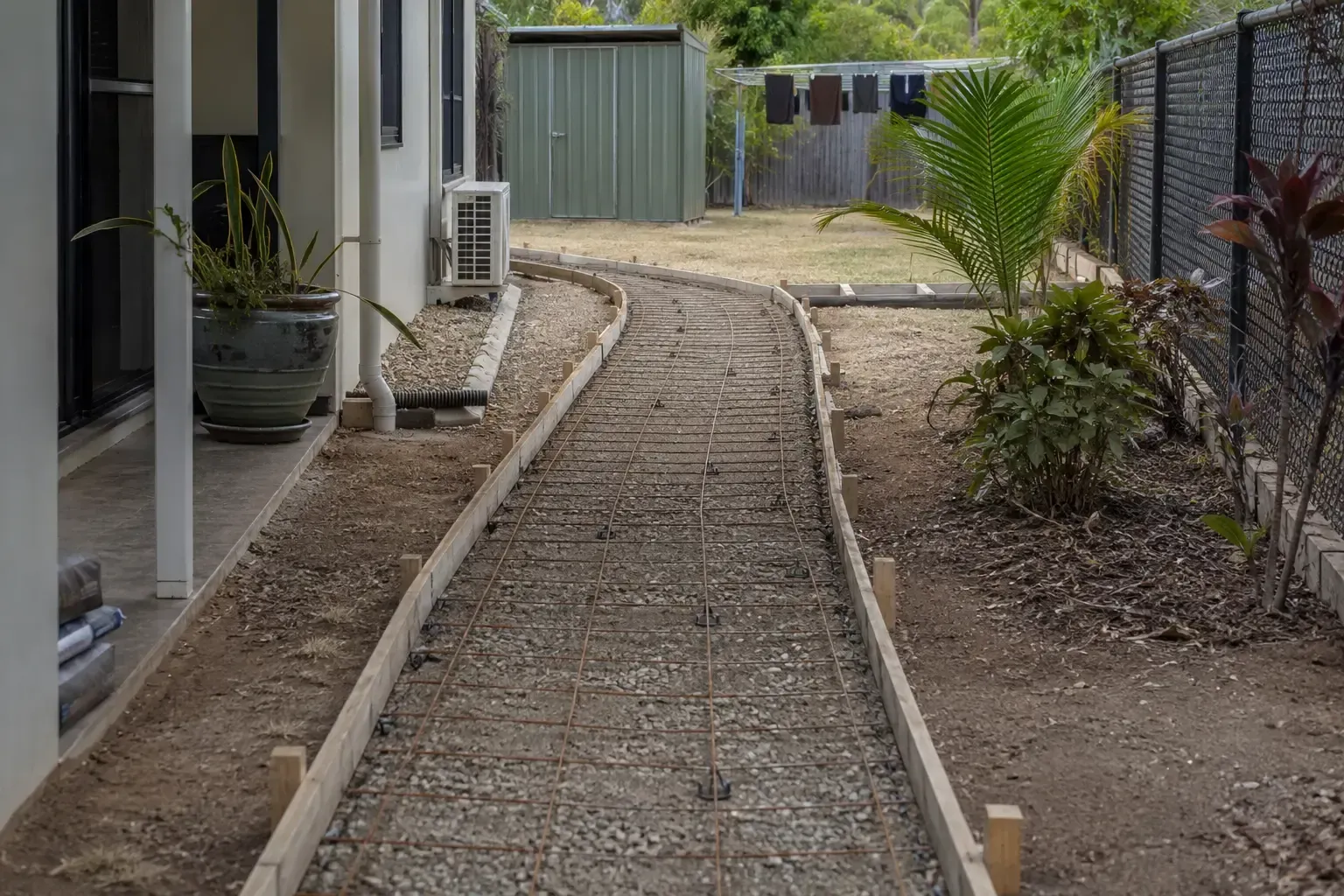
A good path starts with preparation. The area is marked out, levels are checked, soft ground or grass is removed, and the base is prepared so the concrete has a stable surface underneath.
Formwork is then installed to shape the path and hold the concrete in place. This is where curves, edges, width and finished levels are locked in. For paths close to houses, fences or garden beds, this stage is especially important because small mistakes are hard to hide once the concrete is poured.
After pouring, the surface is finished to suit the use of the path. Control joints may be added to help manage cracking, and the path needs time to cure before regular use
Common Path Mistakes That Are Worth Avoiding
The most common problems with concrete paths usually come from poor planning rather than the concrete itself.
One mistake is making the path too narrow to be comfortable. Another is focusing only on appearance and choosing a finish that becomes slippery or hot underfoot. Poor drainage is also common, especially when paths are added later around an already established home.
Another issue is treating every path the same. A front entry path, side access path and pool path all need slightly different thinking. The best result comes from matching the width, finish and fall to how that part of the property is actually used.
To check whether your suburb is within the normal working area, visit the Townsville concrete service areas page before sending through an enquiry.
Frequently Asked Concrete Path Questions
How wide should a concrete path be?
A concrete path should usually be wide enough for comfortable walking and the way the area will be used. Side access paths often need enough room for bins, hoses or garden tools, while garden paths can sometimes be narrower if they are mainly for light foot traffic.
Are concrete paths slippery when wet?
They can be if the wrong finish is used. A lightly textured finish is usually better for outdoor paths because it gives more grip than a very smooth surface, especially around pools, shaded areas and wet side access.
Can a concrete path help with muddy side access?
Yes. A concrete path can stop worn grass and muddy tracks along the side of a home, but the levels still need to be planned properly. If the path is poured without fall, it can replace mud with standing water.
Should a garden path be plain concrete or decorative concrete?
Plain concrete is often enough for utility paths, but decorative concrete can be worth considering for visible garden paths, front entries and pool areas. The right choice depends on how much the path contributes to the overall look of the outdoor space.
Can a new path be matched to existing concrete?
Sometimes it can be made to blend reasonably well, but an exact match is difficult because existing concrete changes colour with age, sun and weather. Finish, colour and join placement all affect how noticeable the new section will be.
Do you service suburbs outside Townsville?
Pathway projects are completed throughout Townsville and many surrounding suburbs. Visit the Service Areas page for more information.
Make the Awkward Parts of Your Property Easier to Use
A well-planned concrete path can make side access cleaner, outdoor areas easier to reach and everyday movement around the home more comfortable.
For concrete paths in Townsville, including side paths, pool access paths, garden paths and practical residential walkways, send through a few details about the area and what you want the path to connect.
Contact Us
We will get back to you as soon as possible.
Please try again later.